Idealistic Meets Realistic: Structuring Passion for Sustainable Impact
Us older generations have a tendency to criticize the generations that have come after us. But in reality, today’s young people are living in a more complex, fast-changing, and scary world than we did when we were their age.
Despite what we may (sometimes) think, young people care. They care deeply about our world. They understand its most pressing challenges – and want to solve them.
From climate change to social inequality, from increased waste and reduced biodiversity, from political volatility to scarce resources – school students are eager to tackle the biggest issues. Their passion is real, and their ideas are often original and groundbreaking.
Passion is vital – but it doesn't generate impact
When it comes to social and environmental initiatives, students hardly ever lack motivation. What is often lacking is structure.
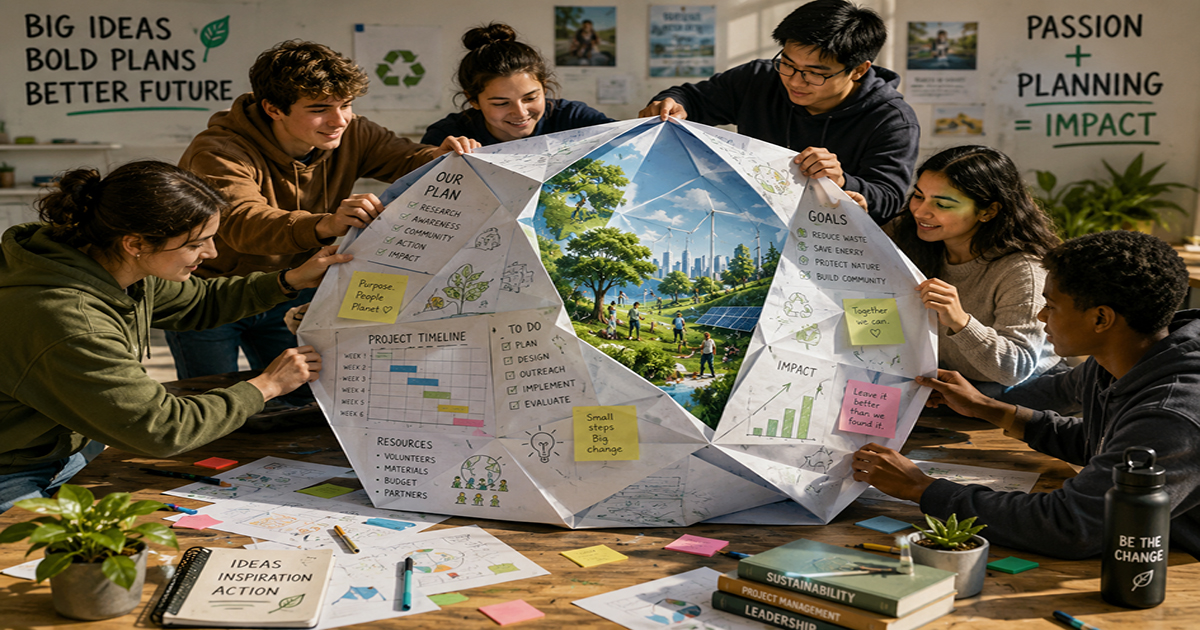
Let’s examine the following scenario. A group of enthusiastic students kickstarts a campaign to increase local sustainability initiatives. At first, the energy is contagious. Meetings are organized. Flyers are designed. Solutions are brainstormed. Yet fast-forward several weeks, and members start missing meetings, responsibilities become unclear, momentum fades, and no one knows who’s really in charge.
This happens quite a lot. It’s not because the students aren’t committed. It’s because they aren’t fluent in project management.
Turning good intentions into real outcomes
When students learn to become competent project managers, they are given proven tools that enable them to channel their ideals and enthusiasm in the most effective ways possible.
Resource management, for example, can help students work effectively within a multitude of constraints. A limited budget? Fewer volunteers than expected? A finite number of materials? No problem. Project management practices show students that it’s not always about how much you have, but rather about how to use what you have (and when).
Time-boxing is another significant tool. Passion projects can expand beyond realistic timetables, which can really hurt the final outcome. But setting milestones and breaking down goals into bite-sized steps allows participants to sustain momentum during complex projects. Consistency matters, and time management is instrumental to its manifestation.
Once students start implementing a slew of project management tools, something magical happens: they become more accountable. Teams that operate effectively are more responsible. They also tend to identify risks earlier. They are more inclined to monitor and review their progress. There’s another name for this type of accountability: Leadership.
Teaching tomorrow's changemakers
Teaching project management in a classroom setting is important, if we want to cultivate the next generation of world-changers.
In today’s world, educators play a key role in preparing young people for the enormous challenges that lay ahead. By bringing project management into the classroom, they can teach that relentless dedication is never enough. Hard work is crucial, but you cannot rely on it as your only resource. Intentional work, effective prioritization, systemic thinking – these are all necessary for success.
The world’s best teachers have always cultivated a passion for empathy and caring. Just imagine if those same teachers also focus on discipline, purposeful planning, and execution. These are not opposing forces. They complement one another to perfection.